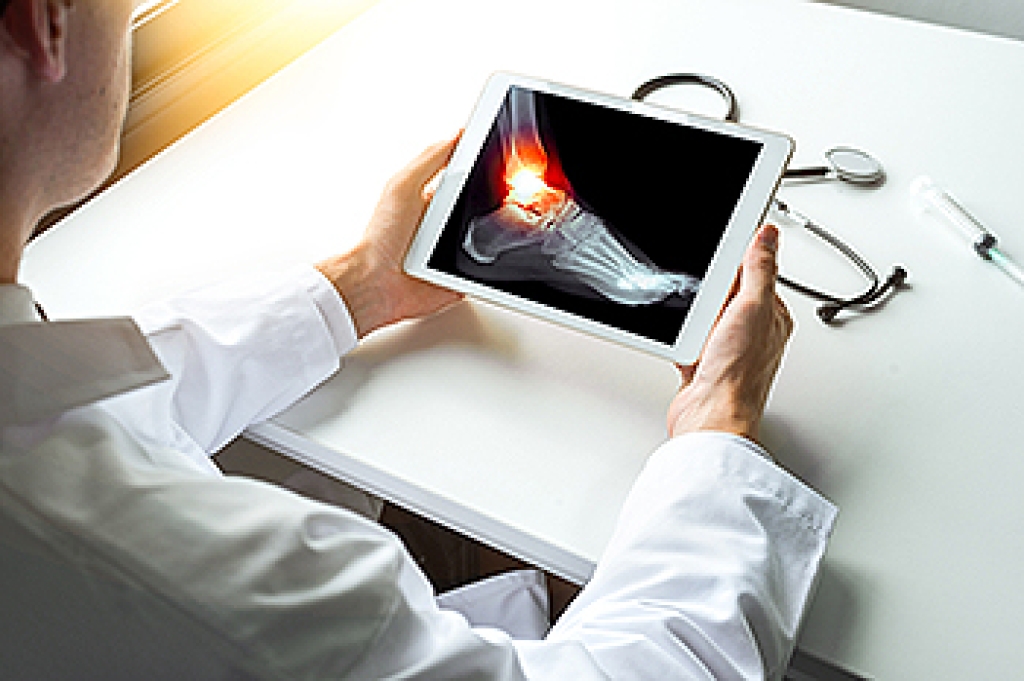
Definition and Impact of a Stubbed Toe

A stubbed toe occurs when the toe forcefully contacts a hard surface, often causing sudden pain and discomfort. This common injury typically happens when the toe collides with furniture, a door frame, or any other solid object. The impact can lead to immediate swelling, bruising, and sometimes a visible injury such as a cut or scrape. While a stubbed toe is usually not severe, it can cause significant pain and difficulty walking. In some cases, the trauma might lead to a fracture or dislocation, which requires medical attention. To manage a stubbed toe, keeping the foot elevated assists in minimizing inflammation. Proper rest and avoiding pressure on the affected toe are essential for a swift recovery. If you have stubbed your toe and it is causing extreme or persistent pain, it is suggested that you promptly consult a podiatrist who can perform an accurate diagnosis to rule out a toe fracture. 

Foot Pain

Foot pain can be extremely painful and debilitating. If you have a foot pain, consult with one of our doctors from Advanced Foot & Ankle Medical Center. Our doctors will assess your condition and provide you with quality foot and ankle treatment.

Causes

Foot pain is a very broad condition that could be caused by one or more ailments. The most common include:

  • Bunions
  • Hammertoes
  • Plantar Fasciitis
  • Bone Spurs
  • Corns
  • Tarsal Tunnel Syndrome
  • Ingrown Toenails
  • Arthritis (such as Gout, Rheumatoid, and Osteoarthritis)
  • Flat Feet
  • Injury (from stress fractures, broken toe, foot, ankle, Achilles tendon ruptures, and sprains)
  • And more

Diagnosis

To figure out the cause of foot pain, podiatrists utilize several different methods. This can range from simple visual inspections and sensation tests to X-rays and MRI scans. Prior medical history, family medical history, and any recent physical traumatic events will all be taken into consideration for a proper diagnosis.

Treatment

Treatment depends upon the cause of the foot pain. Whether it is resting, staying off the foot, or having surgery; podiatrists have a number of treatment options available for foot pain.

If you have any questions, please feel free to contact our offices located in Agoura Hills, Simi Valley, Thousand Oaks Marin St., and Thousand Oaks Haaland Drive, CA . We offer the newest diagnostic and treatment technologies for all your foot care needs.

Read more about Foot Pain

What Is Hallux Rigidus?

Hallux rigidus is a form of degenerative arthritis affecting the joint at the base of the big toe. This condition leads to stiffness, pain, and limited movement in the toe, often making walking or other activities difficult. The primary cause of hallux rigidus is wear and tear of the cartilage in the joint, which can result from repetitive use, injury, or genetic predisposition. People at risk for hallux rigidus include those with a family history of the condition, athletes, or individuals whose activities put repeated stress on the big toe joint, such as dancers or certain laborers. Treatment options vary depending on the severity and can include non-surgical approaches like targeted stretching exercises, anti-inflammatory medications, and custom orthotics to reduce pressure on the toe. In more severe cases, surgery may be necessary to alleviate pain and restore mobility. If you have big toe pain, it is suggested that you schedule an appointment with a podiatrist for a proper diagnosis and treatment.

Toe pain can disrupt your daily activities. If you have any concerns, contact one of our doctors of Advanced Foot & Ankle Medical Center. Our doctors can provide the care you need to keep you pain-free and on your feet.

What Causes Toe Pain?

Most severe toe pain is caused due to a sports injury, trauma from dropping something heavy on the toe, or bumping into something rigid. Other problems can develop over time for various reasons.

Toe pain can be caused by one or more ailments. The most common include:

  • Trauma
  • Sports injury
  • Wearing shoes that are too tight
  • Arthritis
  • Gout
  • Corns and calluses
  • Hammertoe
  • Bunions
  • Blisters
  • Ingrown toenails
  • Sprains
  • Fractures (broken bones)
  • Dislocations

When to See a Podiatrist

  • Severe pain
  • Persistent pain that lasts more than a week
  • Signs of infection
  • Continued swelling
  • Pain that prevents walking

Diagnosis

In many cases the cause of toe pain is obvious, but in others, a podiatrist may want to use more advanced methods to determine the problem. These can range from simple visual inspections and sensation tests to X-rays and MRI scans. Prior medical history, family medical history, and any recent physical traumatic events will all be taken into consideration for a proper diagnosis.

Treatment

Treatments for toe pain and injuries vary and may include shoe inserts, padding, taping, medicines, injections, and in some cases, surgery. If you believe that you have broken a toe, please see a podiatrist as soon as possible.

If you have any questions please contact our offices located in Agoura Hills, Simi Valley, Thousand Oaks Marin St., and Thousand Oaks Haaland Drive, CA . We offer the newest diagnostic and treatment technologies for all your foot and ankle needs.

Read more about Toe Pain

Ankle Fracture? Don’t Wait for Treatment

If you're suffering from an ankle fracture, professional attention shouldn't wait. Fractures may worsen over time and can make completing everyday activities incredibly difficult. See your specialist for treatment and guidance through the healing process. 

Differences Between Sprinting and Long-Distance Track Spikes in Running Shoes

It is important to wear the right type of running shoes for your desired type of running. Choosing the right track spikes on shoes for running depends significantly on the type of event, whether it be sprinting or long distance. Sprinting spikes are designed for short, explosive bursts of speed. They feature lightweight construction, with stiff plates and minimal cushioning to maximize energy transfer and traction on the track. The spikes themselves are often shorter and more aggressive, providing superior grip for powerful starts and sharp turns. In contrast, long distance spikes prioritize comfort and endurance. They typically have more cushioning and support to absorb impact over extended periods. The spike plate is more flexible to accommodate the natural foot motion of longer races, and the spikes themselves are slightly longer for better grip on varying surfaces. This design helps runners maintain efficiency and reduce fatigue during races that require sustained effort over multiple laps or distances. Wearing shoes that are not designed for your specific type of running may lead to developing painful foot conditions. If this has happened to you, it is suggested that you promptly contact a podiatrist who can treat any foot problem and guide you toward buying appropriate running shoes.

If you are a runner, wearing the right running shoe is essential. For more information, contact one of our doctors from Advanced Foot & Ankle Medical Center. Our doctors can provide the care you need to keep you pain-free and on your feet.

Choosing the Right Running Shoe for Your Foot Type

To increase performance and avoid the risk of injury, it is important to choose the right running shoe based on your foot type. The general design of running shoes revolves around pronation, which is how the ankle rolls from outside to inside when the foot strikes the ground.

  • Neutral runners are able to choose from a wide variety of shoes, including minimalist shoes or even going barefoot.
  • Runners who overpronate, or experience an over-abundance of ankle rolling, should choose shoes that provide extra motion control and stability.
  • Runners who underpronate, or supinate, have feet that have high arches and lack flexibility, preventing shock absorption. They require shoes with more flexibility and cushion.

If you have any questions, please feel free to contact our offices located in Agoura Hills, Simi Valley, Thousand Oaks Marin St., and Thousand Oaks Haaland Drive, CA . We offer the newest diagnostic and treatment technologies for all your foot care needs.
Read more about Choosing the Right Running Shoe for Your Foot Type

Managing an Infected Blister

Blisters, often caused by friction from wearing ill-fitting shoes, are fluid-filled bubbles that protect injured skin. While they generally heal on their own, blisters can become infected if the protective skin breaks. An infected blister may feel warm, produce pus, and emit a foul odor. Other symptoms can include increased pain, swelling, and bleeding. Without proper care, an infected blister can lead to serious complications like cellulitis or sepsis, both of which require urgent medical attention. It is important to keep the blister clean and monitor it closely for signs of infection. If an infection is suspected, a podiatrist can provide the appropriate treatment, which might involve draining the blister and prescribing antibiotics or antifungal medications. Podiatrists are equipped to manage and treat infected blisters effectively, ensuring proper healing and preventing further health risks. If you have a foot blister that has become infected, it is suggested that you schedule an appointment with a podiatrist for an exam and treatment options.

Blisters are prone to making everyday activities extremely uncomfortable. If your feet are hurting, contact one of our doctors of Advanced Foot & Ankle Medical Center. Our doctors can provide the care you need to keep you pain-free and on your feet.

Foot Blisters

Foot blisters develop as a result of constantly wearing tight or ill-fitting footwear. This happens due to the constant rubbing from the shoe, which can often lead to pain.

What Are Foot Blisters?

A foot blister is a small fluid-filled pocket that forms on the upper-most layer of the skin. Blisters are filled with clear fluid and can lead to blood drainage or pus if the area becomes infected.

How Do Blisters Form?

Blisters on the feet are often the result of constant friction of skin and material, usually by shoe rubbing. Walking in sandals, boots, or shoes that don’t fit properly for long periods of time can result in a blister. Having consistent foot moisture and humidity can easily lead to blister formation.

Prevention & Treatment

It is important to properly care for the affected area in order to prevent infection and ease the pain. Do not lance the blister and use a Band-Aid to provide pain relief. Also, be sure to keep your feet dry and wear proper fitting shoes. If you see blood or pus in a blister, seek assistance from a podiatrist.

If you have any questions, please feel free to contact our offices located in Agoura Hills, Simi Valley, Thousand Oaks Marin St., and Thousand Oaks Haaland Drive, CA . We offer the newest diagnostic and treatment technologies for all your foot care needs.

Read more about Blisters on the Feet

Connect With Us

scroll-to-top